Prepare the Report for final year project 1
After the presentation, student must submit the report for final year project 1. The project contain 3 chapter, chapter 1 Introduction, chapter 2 Literature Review and Chapter 3 Methodology.
Thursday, 16 May 2013

Week 10
Prepare Slide for Final year project 1 Presentation
Presentation for final year project 1 have been done in week 10. All student must prepare the slide show for own project
The slide must contain:-
Presentation for final year project 1 have been done in week 10. All student must prepare the slide show for own project
The slide must contain:-
- Introduction
- Problem Statement
- Aim and Objective
- Scope and Limitation
- Literature Review
- Methodology
- Expected Result
- Progress Work
- Benefits
- Conclusion
- References
Week 9
Research about the software for this project.
Proteus 7
Proteus 7
Proteus
Virtual System Modeling (VSM) combines mixed mode SPICE circuit simulation,
animated components and microprocessor models to facilitate co-simulation of
complete microcontroller based designs. For the first time ever, it is possible
to develop and test such designs before a physical prototype is constructed.
This
is possible because you can interact with the design using on screen indicators
such as LED and LCD displays and actuators such as switches and buttons. The
simulation takes place in real time (or near enough to it): a 1GMHz Pentium III
can simulate a basic 8051 system clocking at over 12MHz. Proteus VSM also
provides extensive debugging facilities including breakpoints, single stepping
and variable display for both assembly code and high level language source.
 |
| Advantages of VSM |
| Proteus 7 |
Week 8
Research about Digital Thermometer and Thermostat (DS1621)
The DS1621 Digital Thermometer and Thermostat
provides 9-bit temperature readings, which indicate the temperature of the
device. The thermal alarm output, TOUT, is active when the temperature of the
device exceeds a user-defined temperature TH:- The output remains active until
the temperature drops below user defined temperature TL, allowing for any
hysteresis necessary.
User-defined temperature settings are stored in nonvolatile memory so
parts may be programmed prior to insertion in a system. Temperature settings
and temperature readings are all communicated to/from the DS1621 over a simple
2-wire serial interface.
Operation
Measuring Temperature
The DS1621 measures temperature using a band gap-based temperature
sensor. A delta-sigma analog-to digital converter (ADC) converts the measured
temperature to a digital value that is calibrated in °C; for °F applications, a
lookup table or conversion routine must be used.
The temperature reading is provided in a 9-bit, two’s complement reading
by issuing the READ TEMPERATURE command. Table 2 describes the exact
relationship of output data to measured temperature. The data is transmitted
through the 2-wire serial interface, MSB first. The DS1621 can measure
temperature over the range of -55_C to +125_C in 0.5_C increments.
DS1621
FUNCTIONAL BLOCK DIAGRAM
 |
| Block Diagram DS1621 |
Week 7
Research about the Light Dependent Resistors
Light Dependent Resistors are
very useful especially in light/dark sensor circuits. Normally the resistance
of an LDR is very high, sometimes as high as 1000 000 ohms, but when they are
illuminated with light resistance drops dramatically.
Electronic opto sensors are the devices that alter
their electrical characteristics, in the presences of visible or invisible
light. The best-known devices of this type are the light dependent resistor
(LDR), the photo diode and the phototransistors.
 |
| LDR Circuit |
Features:
- High reliability
- Light weight
- Wide spectral response
- Wide ambient temperature range
Applications:
- Smoke detection
- Automatic lighting control
- Burglar alarm systems
- Camera (electronic shutter)
- Strobe (color temperature reading)
Week 6
Research about PIC 16F72

The
PICI6F72 is a low-power, high-performance CMOS 8-bit microcomputer with 2K
bytes Flash programmable and erasable read only memory (PEROM). PICI 6F72 is a powerful microcomputer, which
provides a highly flexible and cost-effective solution to many embedded control
application.
Advantages
of Microcontrollers
- If a system is developed with a microprocessor, the designer has to go for external memory such as RAM, ROM or EPROM and peripherals and hence the size of the PCB will be large enough to hold all the required peripherals.
- But the microcontroller has got all these peripheral facilities on a single chip so development of a similar system with a microcontroller reduces PCB size and cost of the design.
- One of the major difference between a microcontroller and a microprocessor is that a controller often deals with bits, not bytes as in the real world application, for example switch contacts can only be open or close, indicators should be lit or dark and motors can be either turned on or off and so forth.
High
performance RISC CPU
Only
35 single word instructions to learn
All
single cycle instructions except for program branches, which are two-cycle
Operating
speed: DC-20 MHZ clock input
- DC-200 ns instruction cycle.
- Up to 2k x 14 words of program Memory,
- Up to 128 x 8 bytes of Data Memory (RAM)
Pinout
compatible to PIC 16C72/72A and PIC 16F872.
Interrupt
capability.
Eight-
level deep hard ware stack.
Direct,
Indirect and Relative Addressing modes.
Week 5
Research about the Schematic Diagram
For this project, i have use PIC 16F72. In this project, i have use Port A, Port B and Port C. All this port have own function
PORT A

For this project, i have use PIC 16F72. In this project, i have use Port A, Port B and Port C. All this port have own function
PORT A
Port
A can acts as a both input as well as output port. It is having 6 pins (A0-A5).
In these A0 is connected to Dimmer1, A1 is connected to Dimmer2 and A4 is
connected to ZCD output.
PORT B
Port
B can acts as a both input as well as output port. It is having 8 pins (B0-B7).
In these B1 connected to register selection pin(R/S), B2 is connected to
read/write(R/W) and B3 pin is connected to enable pin.
PORT C
Port
C can acts as a both input as well as output port. It is having 8 pins (C0-C7).
In these RC3 and RC4 connected to the thermostat pins.12M Hz Crystal Oscillator
is connected in between 9th and 10th pins of micro controller. Reset pin is
connected to the pin number1 i.e., MCLR/VPP.8th and 19th pins are connected to
ground (Vss).

Friday, 3 May 2013
Week 4
Research about the project
Circuit Diagram that related to this project


Circuit Diagram that related to this project
- Schematic Circuit Diagram

- Light Dependent Resistor
- Dimmer

- Power Supply

Week 3
Research About The Project
Block Diagram of Project

List of Component
Component for Power Supply
Block Diagram of Project

List of Component
- Printed Circuit Board
- Micro controller à PIC 16F72
- 5V, 12V Dc Power supply
- IR sensor à Passive Infrared Sensor
- LDR à Light Dependent Resistor
- Thermostat
- LCD à Optrax, 2 line by 16 characters
- Zero Crossing Detector
- Lamp (Mentol)
- Fan (Motor)
Component for Power Supply
- Step down transformer.
- Bridge rectifier circuit.
- Input filter.
- Voltage regulators.
- Output filter.
- Indicator unit.
Week 2
Finalize the Project Title and Do research for the Project Title
I have choose the Intelligent Energy Saving System (Automatic Control)
This is background of my FYP Project
I have choose the Intelligent Energy Saving System (Automatic Control)
This is background of my FYP Project
"When
people are not present at a place the lighting can be made OFF and when they
are present, the lighting made ON. All these can be done through by Dimming
circuit and PIR sensor."
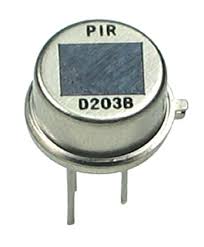
PIR Sensor that use in this project
Wednesday, 1 May 2013
Week 1
Find The Assessor for final year project
Find Title of project for final year project
I have choose Madam NOOR HIDAYAH BINTI MOHD YUNUS as my assessor.
For the title for final year project i have choose some of topic. The topic is:
Energy saving monitoring
Automatic Water Contoller
Intelligent Energy Saving System (Automatic Controll)
Find Title of project for final year project
I have choose Madam NOOR HIDAYAH BINTI MOHD YUNUS as my assessor.
For the title for final year project i have choose some of topic. The topic is:
Energy saving monitoring
Automatic Water Contoller
Intelligent Energy Saving System (Automatic Controll)
Subscribe to:
Comments (Atom)